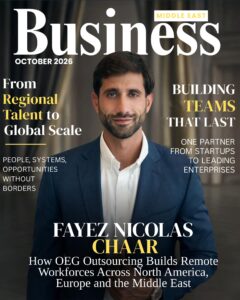







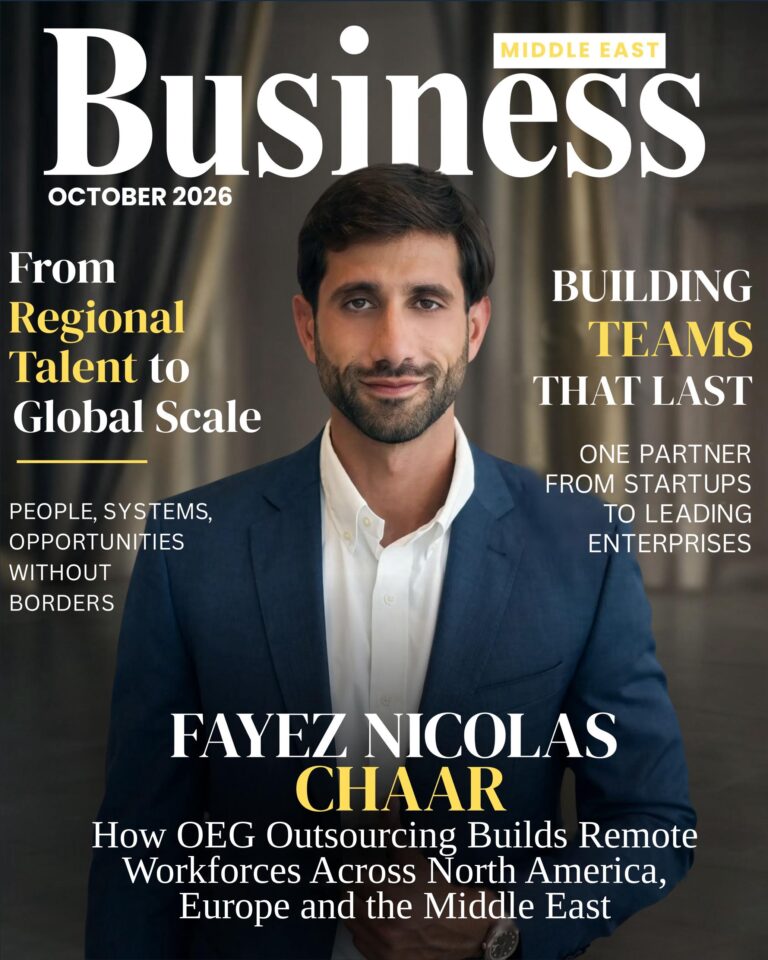

One week after launch, the website died. It didn’t slow down or fail in stages. It stopped. Ten thousand students had been waiting for it, some for close to a year. When the doors opened they all came at once, which was the most predictable thing in the world and the one thing nobody had planned for.
The platform had already proved, publicly and in advance, how big its audience was. No one had built the servers to carry it. The refunds ran to hundreds of thousands of dollars, handed back to students who had trusted a product that couldn’t stay up.
At 21, that isn’t a write-down. It’s a lesson you carry into everything you build next.
He could have blamed the market, the users or bad luck. He didn’t. He went looking for what had actually broken, and he found it where few founders look: not in the idea and not in the demand, but in how the work had been organized and who had been trusted to do it.
Five years later he runs four companies from Miami, all built on one conviction he learned the hard way: the limit on a growing business is almost never talent. It is structure. And unlike luck, structure can be designed.

It started at university with a simple observation. A student stuck on a problem late at night doesn’t need help on Thursday. They need it now. Yet academic tutoring is organized around the tutor’s calendar, not the moment the student gets stuck.
The idea took off before there was anything to sell. Within six months, purely by word of mouth, more than 10,000 students had signed up for a platform that didn’t exist yet.
Founders spend years and serious money trying to manufacture that kind of signal. Chaar got it for free.
He spent the next year making sure it would last rather than spike, and in 2021 he registered the company. Then he went looking for someone to build it.
A friend, one of Lebanon’s better-known entrepreneurs, introduced him to one of the largest and most respected development firms in the Middle East. The firm quoted a substantial fee for the website and mobile app, and he paid it.
On paper he had done everything right, in the right order, with the right people.
What he couldn’t see was that while the firm was building his product, it was also winning bigger clients.
“I was paying less than their bigger accounts, so I became less of a priority,” he says. “What should have taken a few months took three times as long.”
The platform launched six months late. Then it collapsed under the exact audience it had been built for.
“Nobody projected the capacity we would need,” he says. “They were not thinking about my business, because mine was not the account paying the most.”
That isn’t really a complaint about one vendor. It describes how the whole outsourced-services market hands out attention: quietly, all the time, and away from whoever pays least.
Chaar wasn’t cheated. He was the smallest name on someone else’s client list, and the system worked exactly as designed.
He came out of that year with two commitments.
The first was internal and non-negotiable.
“We would never depend on another company again,” he says. “Everything in house, built by our own people.”
The second became a business. If the smaller client always got served last, he would build something so that nobody else had to learn that lesson the way he did.
“Every business deserves a partner who gives them 100 percent of what they need,” he says. “Not whatever is left over after the bigger accounts have been looked after.”
He also had the training to turn a grievance into a method.
Chaar studied at the C. T. Bauer College of Business at the University of Houston and trained as an industrial engineer. That field is built around one unglamorous question: where does the work actually go, and what does it cost to move it one step further?
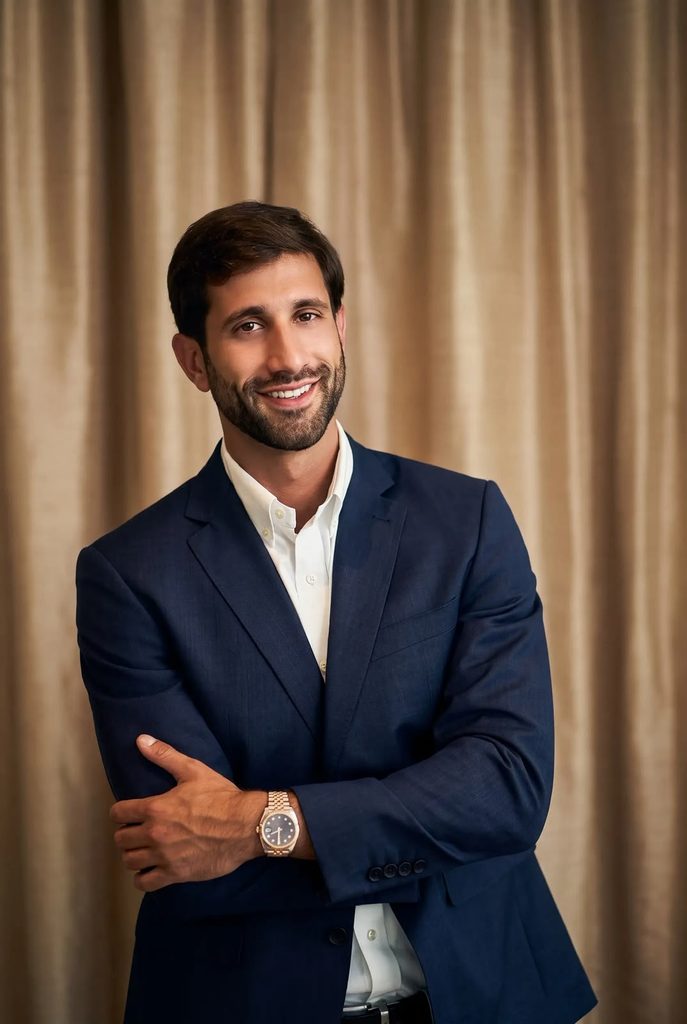
OEG Outsourcing reverses, almost point by point, the relationship that failed him.
OEG employs its people directly instead of brokering them, and places them inside the client’s own operation. No client waits behind a bigger account, because there’s no queue to wait in.
It’s the largest of his four companies and the clearest test of his thesis.
By the company’s own account, roughly 1,200 people across Lebanon, Egypt, Jordan and Syria now work full time inside client operations in North America, Europe, the Gulf and Australia.
Behind them is a pool of 600,000 vetted candidates. That’s the bench OEG draws from every time a client needs another seat filled.
Chaar insists on separating OEG from a staffing agency. That matters, because in a brochure the two look the same.
A staffing agency’s job ends at the placement. OEG’s job starts there.
Every engagement begins with what he calls workforce architecture.
In practice, OEG won’t place anyone until a set of questions has been answered:
• Which functions does the client actually need, as opposed to the ones it has always had?
• How do those roles connect?
• Who owns which decision?
• What is each seat measured on?
Only then are people deployed, onboarded into the client’s own systems and measured against agreed KPIs.
It’s a slower start than the market is used to. The payoff comes later.
A client in the Gulf started small, on purpose.
The first deployment was four engineers: one architect, one structural, one mechanical, one electrical. It was a pilot, the kind that usually either fades away or sits at four people for a year.
Within 60 days, the team had passed 100 engineers.
The client was growing faster than any local hiring process could keep up with. The 600,000-candidate pool meant the people were there.
But plenty of firms have a big database. What let OEG keep pace was that the first four seats had been designed rather than simply filled.
The team’s shape already existed: what each role did, who it reported to, how it was measured and how a new person was onboarded.
Every engineer after the fourth was a known quantity, not a new problem.
That one number makes the whole argument. A staffing agency would have run a hundred separate searches, each one a fresh negotiation.
OEG designed the team once and then repeated it.
Depth of talent made the growth possible. Structure made it fast.
The range of roles is also wider than the offshore stereotype suggests.
OEG places civil, BIM and MEP engineers and technical drafters alongside software developers, finance and payroll teams, marketing and revenue operations staff, recruiters and executive support.
Every offshore model runs into the same objection, usually unspoken: cheaper must mean worse.
Chaar’s answer is that the objection gets the math wrong.
“The quality is the same. The difference is cost of living,” he says. “A business pays less, and the engineer earns a salary that goes much further where they live. Both sides win. Nobody has to lose for this to work.”
Companies report operating-cost reductions of 40 to 60 percent compared with equivalent local hiring.
His point is that the saving comes from geography, not from cutting the standard of the work.
Buyers mix the two up because a decade of bad outsourcing taught them to expect both together.
There’s an irony he doesn’t need to point out. The firm that failed him was expensive, based in the region and highly reputable.
The price guaranteed nothing.
A method that only works in one industry isn’t a method. It’s a specialty.
Chaar has tested his in three more.
Our Easy Game Tutoring, founded in February 2024 and registered in Houston, Texas, goes back to the original problem and solves it properly.
The insight hasn’t changed: the student’s need is urgent, and the industry isn’t built for urgency.
Our Easy Game runs a verified global tutor network with AI-assisted matching on a subscription model, available on iOS and Android.
Behind the student-facing app sits the part he cares about most: structured tutor onboarding, performance monitoring and retention analytics.
The visible product is a matching app. The real product is the system that keeps good tutors in the network.
The Automation Department, co-founded recently in Miami, takes the method out of org charts and into software.
Where OEG designs the human side of an operation, The Automation Department builds what runs underneath it: the workflows, integrations and exception logic that companies usually handle by hand and by email.
In its own builds, 75 to 90 percent of invoices now go straight through without anyone touching them, and exception logic resolves 60 to 70 percent of the cases that would otherwise land on someone’s desk.
For Segue Living, lease signing and handover now run on automated workflows.
For the olive oil brand Levantine Goods, the firm leads growth.
The idea is the one he learned in 2021, written as code: map the process before you build it, or the system will fail exactly when demand shows up.
The Clip Kitchen, co-founded in July 2026 in Miami, starts from an observation he repeats often: most businesses don’t have a content problem. They have a production problem.
They’ve tried a videographer, a freelance editor, an agency, and each time the output lasted only as long as someone kept chasing it.
What breaks is never the creativity. It’s the lack of a pipeline that turns one day of filming into a month of content.
The Clip Kitchen runs that pipeline as a subscription, with in-person shoots in Miami, dedicated editors handling volume for clients worldwide and an iOS app that manages uploads, approvals and delivery.
Workforce, education, automation, video: different industries, same pattern.
Find the process everyone is improvising, build it once, then run it.

Running one method across four unrelated businesses is why Chaar is now often brought in to advise companies he doesn’t own.
The method rests on three principles.
1. Reverse the sequence.
Most founders hire first and hope structure grows out of the people.
Chaar builds the structure first: the process map, the written SOPs, an org design that says who owns what and who escalates to whom, then the KPI framework everything is measured against.
People are hired into a shape that already exists.
2. Take the founder out of the middle.
This one is harder to hear.
A company where every decision runs through one person hits a ceiling long before the market does.
Most of the work of scaling is removing that person from the center of the org chart.
Chaar does this to himself as routine, not as a principle he talks about.
3. Divide the labor.
He sets strategy and manages the specialists who build the systems, automations and integrations.
He doesn’t write code.
What he sells is knowing what needs to exist, in what order, and making sure it gets delivered.
That’s exactly the service nobody sold him in 2021.
Asked what’s hardest about the business, Chaar doesn’t name an operational problem.
He names a human one.
“The hard part is choosing who to work with,” he says. “Not everyone has the same goals or the same drive. And some businesses cannot sit with the risk long enough to see it work. They give up too early.”
The answer says more than it first seems to, because it points at the built-in weakness of selling structure.
A new hire produces something in week one, which is why hiring feels good.
A rebuilt operating model produces nothing visible for a while, and the client has to hold their nerve through the stretch where they’re paying for a diagram.
Some can’t.
That isn’t a flaw in the method, but it does limit who the method can help.
So he has become more selective.
He looks for businesses that want a partner rather than a supplier.
That’s exactly the thing he couldn’t buy in 2021.
Underneath all four companies is a claim about where capable people are and how the world reaches them.
The usual view treats the Middle East and North Africa as a cost center, somewhere to send work that has become too expensive at home.
Chaar argues the region is a capability center that has been priced wrong.
A company employing Lebanese, Jordanian or Egyptian engineers, he says, gets the same standard it would get in London, at a different cost.
A vetted pool of 600,000 candidates shows how much of that capability exists.
His own evidence is unusually direct: the failure that started all of this wasn’t caused by a lack of regional talent.
It was caused by a structure that put his account last.
He’s now taking the model in two directions.
Deeper, into operations, advising founders on structure, workforce design and automation strategy.
And outward, into technology that lets distributed teams coordinate without a manager standing over them.
From Beirut in 2021 to Miami in 2026, the lesson hasn’t changed.
The week the site went down, he learned that demand isn’t the hard part and talent isn’t the hard part either.
Build the system first, and scale follows.